|
‘Summer Camp in Little Lhasa’
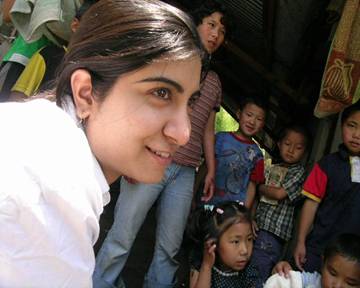
Participants enjoying interactive session with future seeds of Tibet
. . . . . . . . . . . . . . . . . . . . .
Dharamshala: The Delhi Chapter of Friends of Tibet organised its third consecutive camp to Dhramshala, to introduce students of Delhi University to the issue of Tibet, in its entire political spectrum. The camp took place from 4th to 9th of June 2007. A week long camp to participants mostly of Indians created a lot of space for conversations and discussions on subjects like political history of the Tibetans, Tibetan freedom struggle, Tibetan culture and Buddhism, and functioning of Governmental and non-governmental Tibetan organisations in exile among other things. Anurag Chaturvedi (graduate from Delhi University, will start working with KPMG), Vivek Sharma (graduate from Delhi University, working with Ernst and Young), Neha Sharma (graduate from Delhi University, working with Capital IQ), Tenzin Namdol (Student of Law, Delhi University) and Niel (Student of Law, Delhi University) participated in the summer camp. Other expected participants from Mumbai and Chennai were, however, forced to drop out at the last moment due to recent Meena-Gujjar violence that affected parts of Gujarat and Haryana. Summer camp Day 1 to 6 Day 1: Speaking to the camp participants, Tenzin Tsundue, General Secretary of FOT traced the history of the Tibetan issue from 1959 to its present stage and the immediate future. Tenzin Tenzin Choeying, National Coordinator of Students for Free Tibet (SFT), India mainly stressed on the opportunities the upcoming 2008 Olympics in China presented to the Tibet Support Groups across the globe to actively campaign against the Chinese presence in Tibet. Later in the day, the students met Ngawang Woeber, President of the Gu Chu Sum Movement of Tibet, - the ex-political prisoners association. Mr Woebar explained the status and condition of Tibetan political prisoners in China. He also discussed how the recent refugees from Tibet, especially the nomadic tribes described military build up around the hills near the Indian border. Day 2: The students interacted with Lakhdor La, in the Library of Tibetan Works and Archives. Lakhdor La introduced the basic tenets of Tibetan Buddhism. The session helped the participants understand the spiritual roots of the ethos of non-violence that marks the political activism of Tibetans. Later, they were introduced to the various departments and functioning of the Central Tibetan Administration (CTA), by Mr. Masood Bhatt who works with the Department of Public Relations of the CTA. Talking to him made the students realise that there are Tibetan Muslims or Christians. In the evening, the participants had tea with Deputy Speaker Dolma Gyari, at the Parliament of the Government in Exile. The Deputy Speaker quickly reminisced about her days as a student in the Law Faculty of Delhi University before she answered questions regarding the Strasbourg Declaration of the Dalai Lama (1988), calling it a “compromise.” She also commented on the way the Tibetan freedom struggle is evolving, showing how complex the apparent divide between the two opinions of seeking genuine cultural autonomy within China and independence is. When the recent scuffle scrap between the Indian taxi drivers and young Tibetans was talked about, she expressed her worries about the tension, which exists between the Indians and Tibetans in Dharamshala. She feels that the future of the struggle will depend hugely on India’s role, and she expects young Indians to realise this. She feels Friends of Tibet is a good platform for advocacy to make Indians aware of Tibet. Day 3: An interaction between 70 Tibetan students studying in various parts of India and Nepal, with the camp participants, arranged in coordination with Tibetan Parliamentary and Policy Research Centre (TPPRC). The discussion brought to the fore the importance of the Tibetan students being able to talk to the Indians about Tibet, the kind of language and cultural barriers they face and how to overcome them. The camp participants also visited the Norbulingka and the Tibet museum. Day 4: Visits to the Tibetan Institute of Performing Arts (TIPA) and the Tibetan Children’s Village School (TCV) were arranged. Later, screening of Conflicts (BBC) followed by discussion was held. Day 5: The camp participants met the current Vice President of the Tibetan Youth Congress (TYC), Mr. Lobsang Yeshi. He described the origins and the need for TYC, and its ideology. He also delved on the topic of how India needs to support an independent Tibet. Later a discussion on the future activities of Friends of Tibet with Tenzin Tsundue took place. He briefly sketched the founding and the functioning of the organisation, and how the camp participants can now contribute to FoT’s activities. Day 6: After a brief meeting with Lhasang Tsering, the camp participants attended the talk by Jamyang Norbu in Yongling School, wherein he talked about the status of the Tibetan struggle, and how the Tibetans need to start discussing and understanding China.
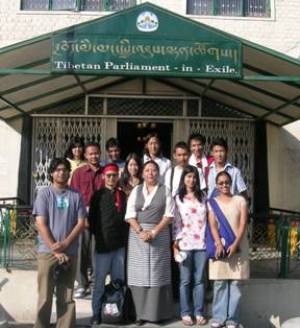
Photo session with Deputy Speaker Gyari Dolma (Centre) at the exile Tibetan Assemly House
'Tibet Summer Camp' in Dharamshala was organised by Friends of Tibet (Delhi) from June 4-9, 2007.
|


|